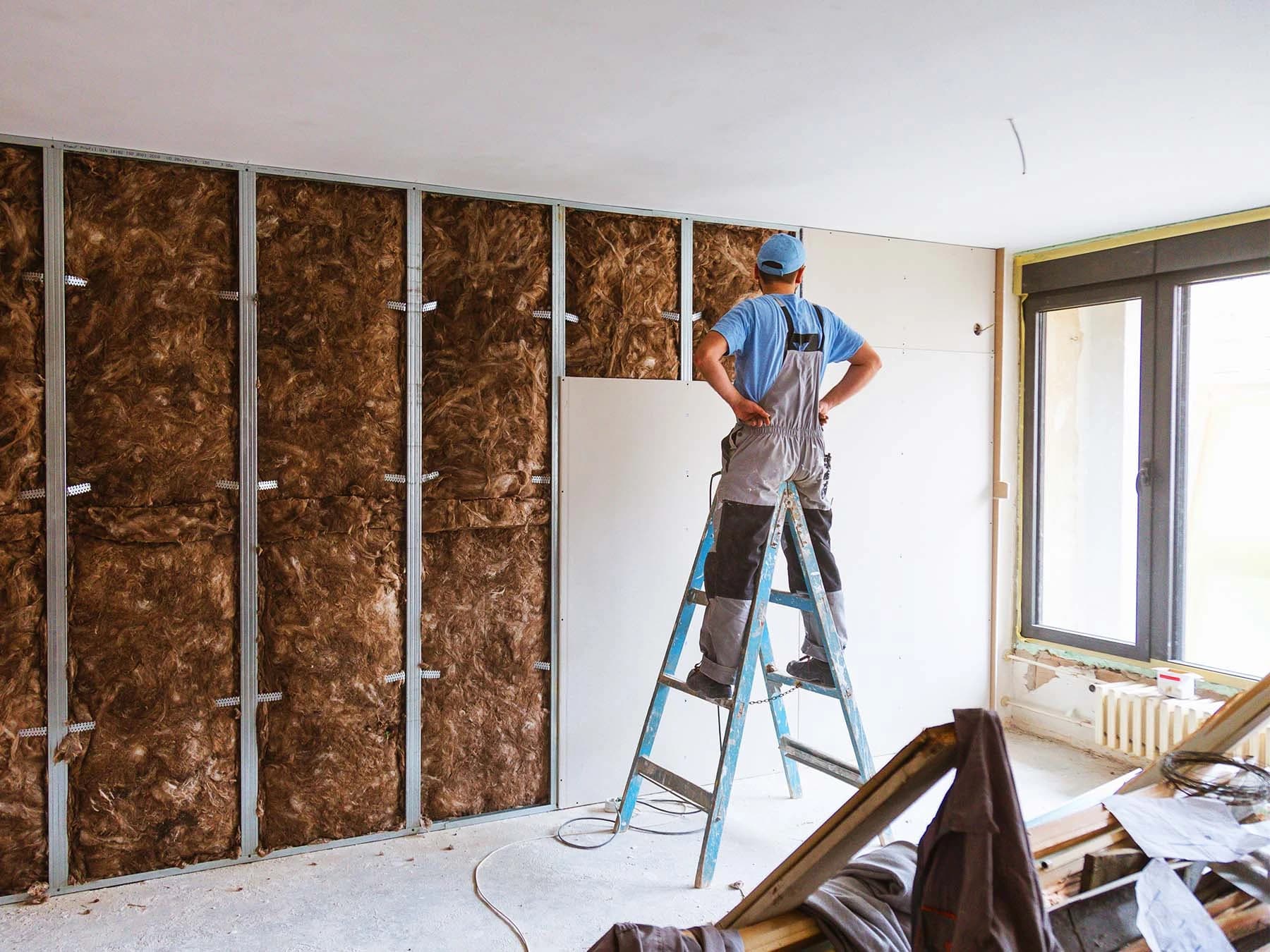
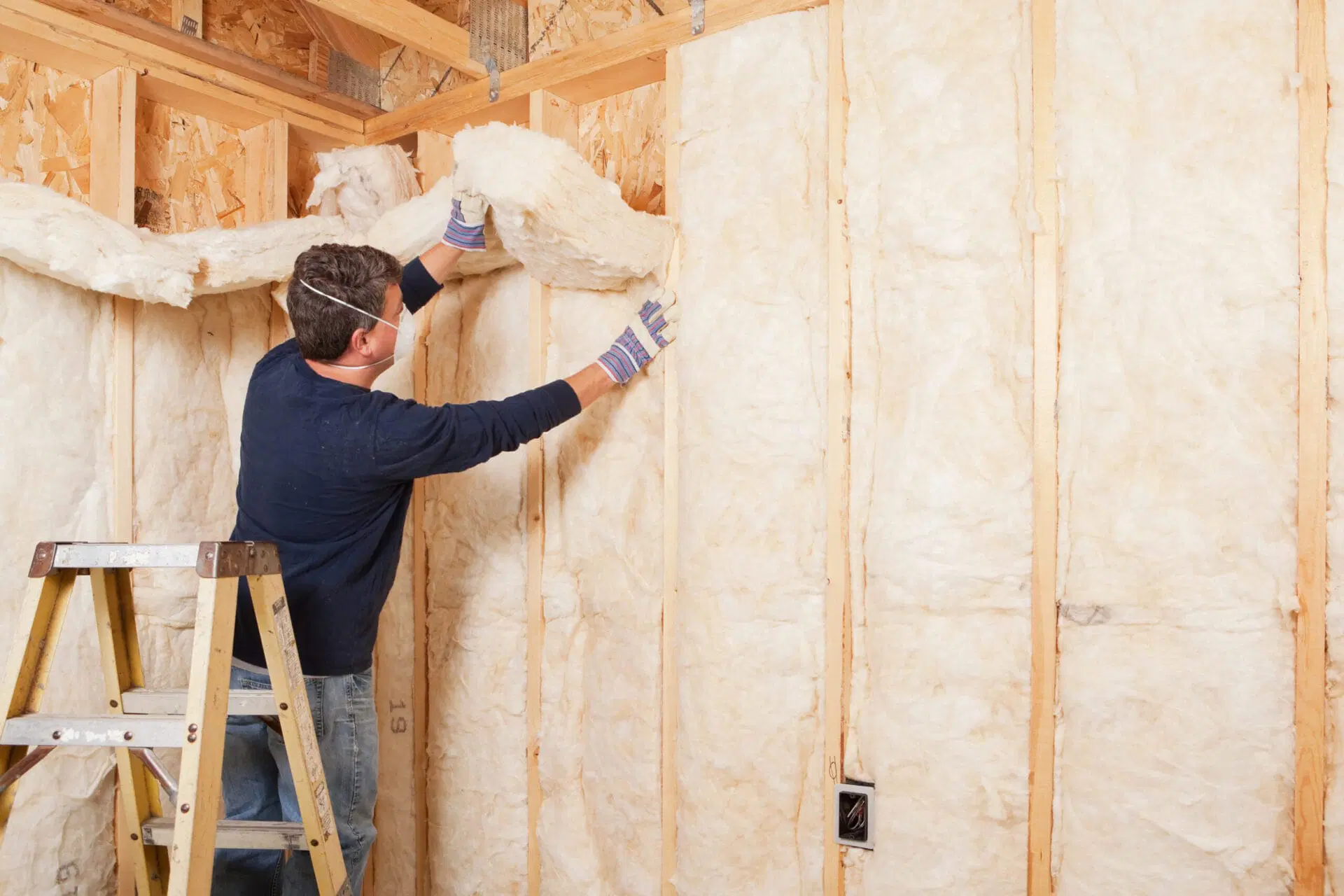
Insulation is the cheapest comfort you will ever buy. It has no moving parts, needs no maintenance, and keeps working every day for the life of the building. It is also the item most often value engineered down to the bare minimum, which is a decision homeowners regret every February.
This guide explains what the numbers mean, what insulation R-values Adelaide homes actually need, and the installation faults that waste money regardless of what is printed on the packaging. It comes from the team at MYT Buildings Solutions who install these systems to compliance documentation across South Australia.
What an R-value actually measures
R-value measures resistance to heat flow. Higher number, more resistance, less heat moving through. It is that simple, and it works in both directions: the same insulation that keeps heat out in January keeps warmth in through July.
Two distinctions are worth knowing. Material R-value refers to the product alone. Total system R-value refers to the whole assembly including air gaps, linings and cladding. Energy assessments work in system values, which is why a wall does not simply inherit the number printed on the batt packaging.
Insulation R-values Adelaide homes typically need
Adelaide sits in a temperate climate zone with hot dry summers and cool wet winters, so you are insulating against both extremes rather than optimising for one. As a working guide for new builds:
| Location | Typical range | Notes |
|---|---|---|
| Ceiling | R5.0 to R7.0 | The highest priority. Most heat is gained and lost through the roof. |
| External walls | R2.0 to R2.7 | Limited by stud cavity depth, so R2.7 is the practical ceiling in a standard frame. |
| Underfloor | R2.0 to R3.0 | Relevant for suspended floors. A noticeable comfort gain in older raised homes. |
| Roof blanket | R1.3 to R3.0 | Under metal roofing, also reduces radiant heat and rain noise. |
| Internal acoustic walls | 60mm to 90mm batts | Specified for sound rather than thermal performance. |
How the 7 star standard changed insulation requirements
New homes in South Australia are now assessed against the 7 star standard under the Nationwide House Energy Rating Scheme, lifted from the previous 6 star requirement. In practice that means the whole building envelope has to work harder: better glazing, better sealing, and generally more insulation than builders were specifying a few years ago.
It is a whole of home assessment rather than a simple checklist, so there is flexibility in how you reach the target. Insulation is usually the most economical lever available, because upgrading batts costs far less per star gained than upgrading windows.
Your energy assessor will nominate the specific values your design requires. Treat those as the minimum to install correctly, not an opening position to negotiate down. We install to the assessed specification and provide the documentation your certifier needs, which is part of our Insulation Solutions service.
Installation faults that waste the R-value you paid for
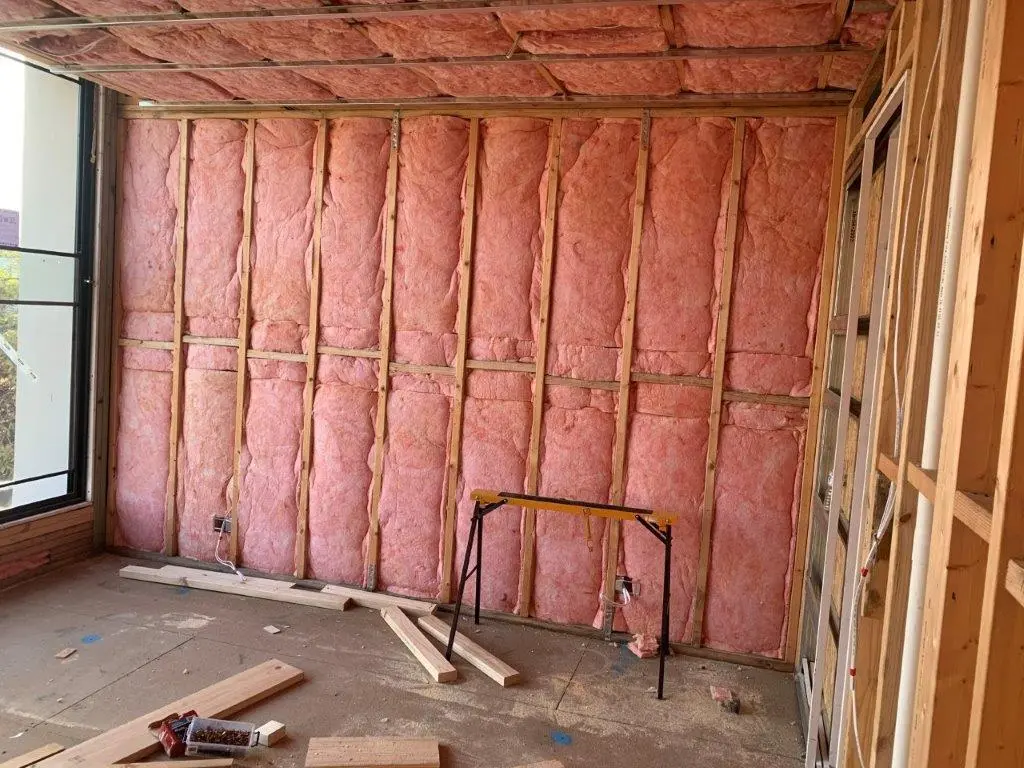
This is the part nobody tells homeowners. An R6.0 batt installed badly can underperform an R4.0 batt installed properly. The rating describes the product under laboratory conditions, not the wall you end up living behind.
- Gaps. Even small unfilled areas around noggins, pipes and wiring create a thermal bridge that hurts performance disproportionately to their size.
- Compression. Squashing a batt into a cavity narrower than its designed thickness reduces its R-value, because the trapped air doing the work is squeezed out.
- Missed edges. Ceiling perimeters, the area above cornices and the zone around downlights are commonly skipped and commonly leak.
- Covered ventilation. Blocking eave vents with batts causes condensation problems that cost far more than the insulation saved.
- Wrong side facings. Foil faced products installed the wrong way round lose the reflective benefit entirely.
If you are engaging an installer, ask how they handle penetrations and perimeters. The answer tells you quickly whether you are buying a product or a result.
Ceiling insulation R-values Adelaide roof spaces need
The ceiling is the single most important surface in the building envelope, and it is where the R-value numbers climb highest. On a 40 degree Adelaide afternoon a roof space can sit far above outside air temperature, and that heat presses down on your ceiling for hours after sunset.
Ceiling batts from R5.0 to R7.0 cover most new build specifications. The higher end of that range is worth considering where the roof space is unventilated, where the roof is dark coloured, or where you plan to run air conditioning hard through summer. The cost difference between R5.0 and R6.0 across a typical house is modest and the comfort difference is not.
Two details matter more than the number. First, continuity: batts must reach right to the perimeter over the top plate, because the edge of a ceiling is exactly where heat finds its way in. Second, downlights: every fitting that requires clearance creates an uninsulated hole, and a ceiling peppered with them can lose a surprising share of its rated performance.
Wall insulation R-values Adelaide stud depths allow
Walls are constrained in a way ceilings are not. A standard 90mm timber stud gives you a fixed cavity depth, and you cannot install a batt thicker than that cavity without compressing it. Compression squeezes out the trapped air that does the insulating work, so an oversized batt actively underperforms the correct one.
That is why wall batts sit in the R2.0 to R2.7 band for most Adelaide homes. R2.7 is realistically the practical ceiling in a standard frame. If your energy assessment demands more wall performance than that, the answer is not a thicker batt forced into the same cavity. It is a deeper frame, a different wall system such as AAC Panels that contributes its own thermal resistance, or performance recovered elsewhere in the envelope.
This is one of the most common misunderstandings we correct on site: more is not automatically better when the cavity cannot accommodate it.
Thermal and acoustic insulation are not interchangeable
Thermal insulation resists heat flow and is rated by R-value. Acoustic insulation is denser and engineered to absorb sound energy, and it is rated differently. They are not substitutes for one another, though many projects use both: thermal batts in external walls and ceilings, acoustic batts in internal walls around bedrooms, bathrooms and living areas.
Retrofitting insulation in an existing Adelaide home
If you own an older home, ceiling insulation is the highest returning upgrade available and often the easiest, since roof space access usually makes it a straightforward job. Many Adelaide homes built before the 1990s have either no ceiling insulation or a thin layer that has compacted over decades and lost much of its value.
Underfloor insulation is worthwhile where a suspended floor is accessible, and it makes a noticeable difference to comfort in older raised homes with draughty floors. Wall insulation is realistically a renovation task, best done while linings are already off for other work.
Frequently asked questions
As a general guide, ceiling batts from R5.0 to R7.0, wall batts from R2.0 to R2.7 limited by stud depth, and underfloor from R2.0 to R3.0 where applicable. Your energy assessment sets the specific values for your design, and those should be treated as the minimum to install correctly rather than a target to reduce.