Brick veneer has been the default external wall in Australian housing for decades. It is familiar, every builder knows it, and buyers recognise it. AAC panels are the challenger, and on a growing number of Adelaide sites they are winning.
This is not a sales pitch for one over the other. Both are proven systems and we have installed walls alongside both. The right answer depends on your site, your budget, your programme and what you want the finished house to feel like. Below is the comparison as we would explain it standing on your slab.
AAC panels vs brick veneer at a glance
| AAC Panels | Brick Veneer | |
|---|---|---|
| Install speed | Very fast, large format panels | Slower, laid unit by unit |
| Weight | Around a quarter of concrete, lighter footings | Heavy, more structural support required |
| Thermal | Insulating through the panel itself | Low, relies on cavity insulation |
| Fire | Non-combustible, high FRL in tested systems | Non-combustible, good performance |
| Acoustic | Strong for its thickness | Strong, benefits from mass |
| Finish | Requires render, texture or cladding | Finished as laid, no coating needed |
| Look | Smooth contemporary rendered finish | Traditional masonry, wide colour range |
| Maintenance | Recoat render periodically | Very low, occasional repointing |
| Weather delays | Minimal | Wet weather stops laying |
Thermal performance: where AAC panels beat brick veneer
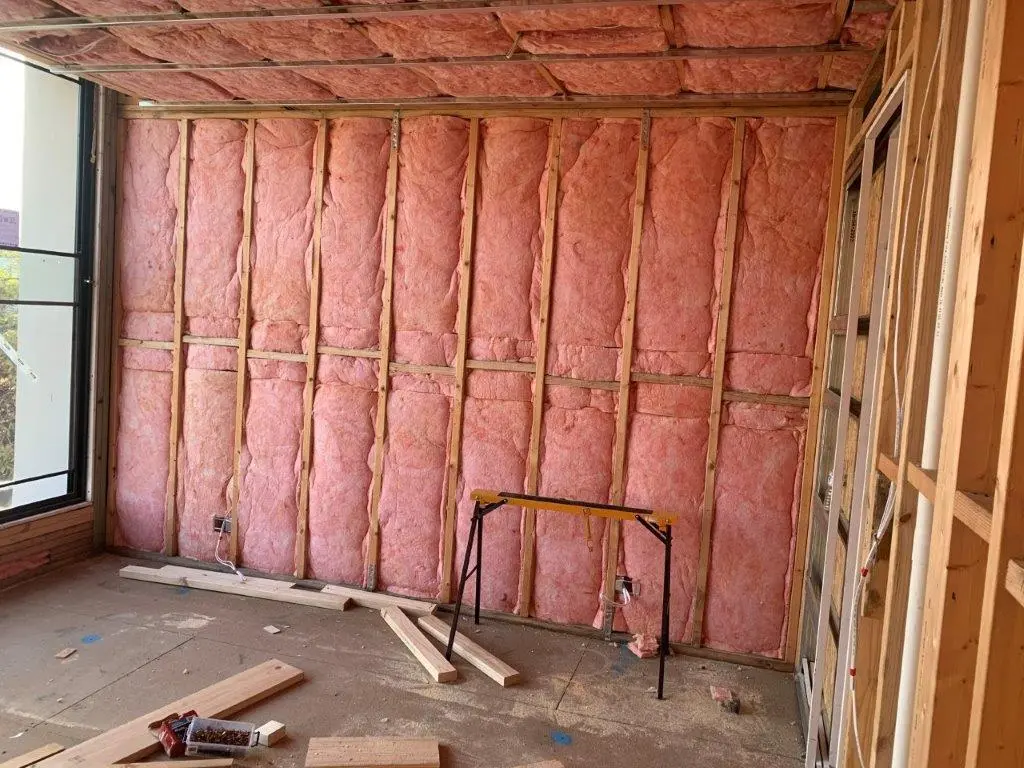
This is where the two systems differ most fundamentally. A brick veneer wall gets almost all of its thermal resistance from the insulation in the frame cavity behind the bricks. The brick itself contributes very little R-value, though it does add thermal mass that can help moderate temperature swings across a day.
AAC works differently. The aerated structure means the wall material itself resists heat flow, so the panel contributes to your thermal envelope before you add any insulation at all. In practice that makes it easier to hit the energy performance your assessment requires, which matters more now that new South Australian homes are held to the 7 star standard under NatHERS.
Build speed and programme impact
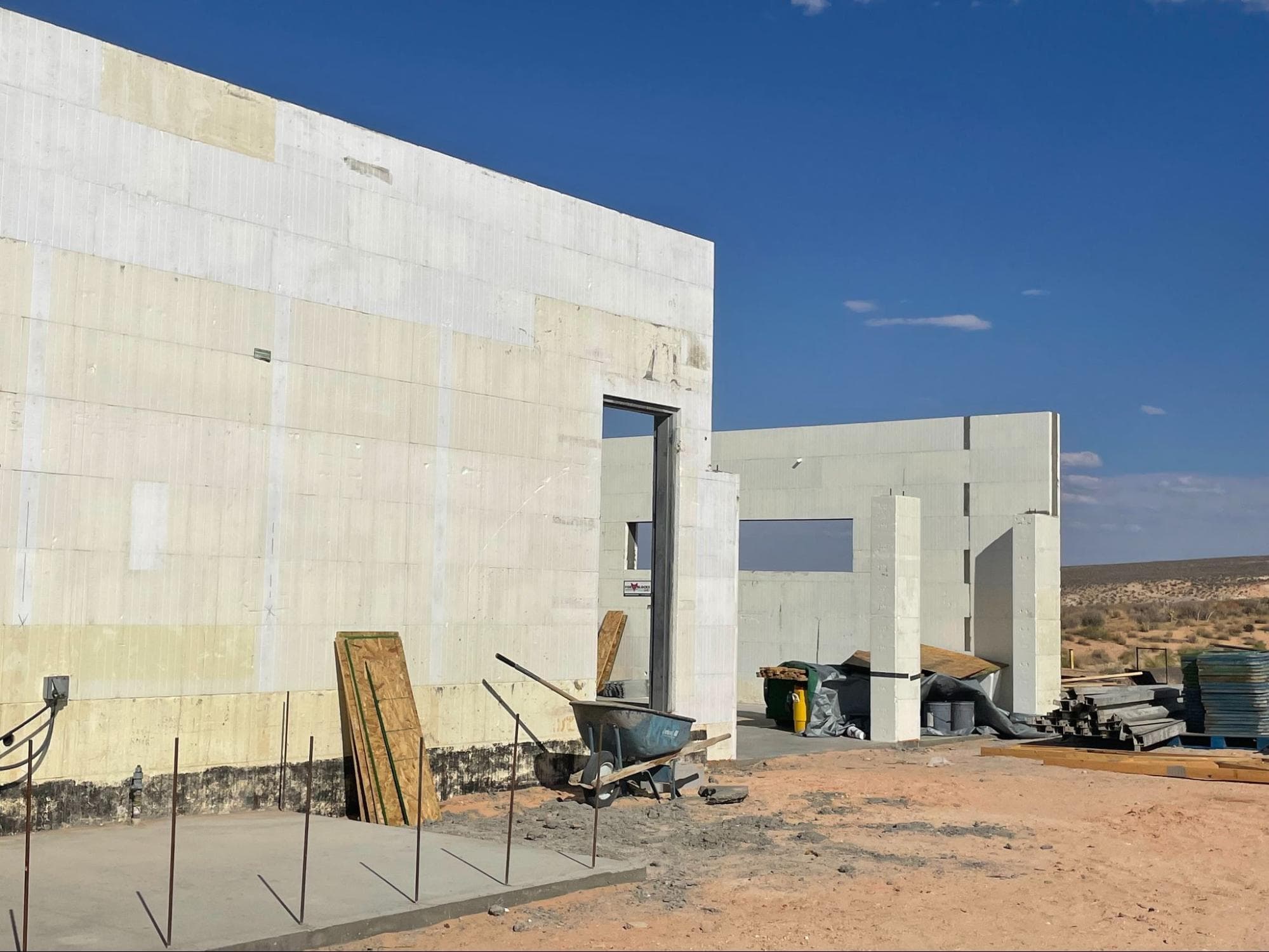
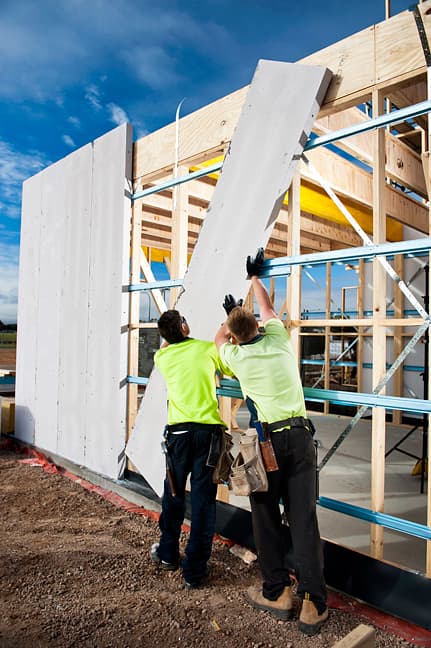
A bricklaying crew works course by course, and the work stops when the weather turns. AAC panels are stood in large pieces, often floor to ceiling, so a wall run that would take days can be up in hours. On a fixed price build with holding costs ticking over, reaching lock up sooner is real money rather than a marginal convenience.
There is a second order benefit that rarely appears in comparisons: fewer deliveries and less site storage. Palletised brick occupies space and needs mortar mixed on site. Panels arrive, get stood, and the site stays cleaner, which matters on the tight infill blocks common across Adelaide's inner suburbs.
Where brick veneer still wins
If you want a face brick look, brick veneer delivers it directly with no coating and almost no maintenance for decades. AAC cannot replicate that appearance, and a rendered finish will need recoating at some point in its life. If face brick is the aesthetic you want, that is a completely legitimate reason to choose it and we will tell you so.
Brick also has the advantage of universal familiarity. Every trade knows how to work with it, every repair is straightforward, and in established streetscapes where neighbouring homes are masonry, it can be the better contextual fit. There is also a resale argument in some Adelaide suburbs where buyers still equate face brick with solidity.
Fire performance and boundary walls
Both systems are non-combustible, so this is not a case of one being safe and the other not. The practical difference shows up on tight boundaries. AAC panel systems achieve the required fire resistance levels in relatively slim wall build ups, which preserves internal floor area on narrow blocks. On a 7 metre wide infill site, the space recovered across two boundary walls is worth having.
Acoustic performance between rooms and dwellings
Mass stops sound, and both systems have it. For intertenancy walls between townhouses or apartments, where the National Construction Code sets minimum acoustic performance between dwellings, AAC is widely used because it delivers strong separation without the thickness and weight of a double masonry wall. Pair it with acoustic insulation and correct sealing and the result is a genuinely quiet dwelling.
Structural and site implications
- Lighter walls mean reduced load to the footings, which can matter on the reactive clay soils common across Adelaide.
- Less weight generally means less structural steel and simpler support over openings.
- Fewer deliveries and less on site waste than palletised brick with mortar mixing.
- AAC is far less weather dependent to install, so wet weeks disrupt the programme less.
- Panels can be cut on site to suit, which handles the small dimensional surprises every build produces.
Cost comparison: AAC panels vs brick veneer
Cost is where most conversations start, and it is also where the comparison is most often done badly. Comparing a supplied panel rate against a supplied brick rate tells you almost nothing, because the two systems carry different costs on either side of the wall itself.
With brick veneer, the laid rate usually includes the finished appearance. There is no coating to follow, but there is a bricklaying crew on site for longer, mortar to mix, scaffold time, and a structure sized to carry the additional weight. With AAC, the panel and installation happen quickly, but the render or texture coat is a separate trade and a separate line in your budget.
Where AAC panels vs brick veneer separates decisively is in the costs that never appear on a materials quote: weeks of programme, holding costs on your finance, structural steel over openings, and footing design on reactive soil. On a typical Adelaide build those indirect savings frequently outweigh the render cost, which is why the lighter system often wins on total project cost while looking more expensive line by line.
Long term maintenance: AAC panels vs brick veneer
Over a twenty year horizon, brick veneer is the lower maintenance external skin. Face brick is effectively self finishing. It may need occasional repointing and a wash, but there is no coating to fail and no recoating cycle to budget for.
A rendered AAC wall has a finish that will eventually need attention. Modern acrylic renders and texture coats are durable and hold colour well, but they are a coating, and coatings weather. Expect to repaint or recoat at some point, on a cycle similar to any painted exterior.
That said, a rendered finish is also easier to change. Repainting a rendered facade in a different colour is straightforward, whereas altering the appearance of face brick means rendering over it or living with it. If you like the idea of refreshing the look of your home in a decade, that flexibility has genuine value.
So which wall system should you choose?
Choose AAC panels if you want a contemporary rendered look, you are chasing energy performance, your programme is tight, you are building on a boundary or on reactive soil, or you are doing multi residential work where fire and acoustic ratings drive the specification.
Choose brick veneer if a face brick appearance matters to you, you want the lowest possible long term maintenance on the external skin, or you are matching an existing masonry home in a streetscape where that character carries value.
Plenty of good projects use both: AAC where performance and speed matter, brick where it is seen from the street. There is no rule that says the whole house has to be one system, and mixing them is often the most economical answer of all.
Frequently asked questions
They are strong in different ways. Brick has higher compressive strength per unit, while AAC panels are engineered as a walling system with reinforcement and a specified fixing method. For the loads a residential wall actually carries, both sit well within capacity when correctly installed, so strength is rarely the deciding factor between them.